
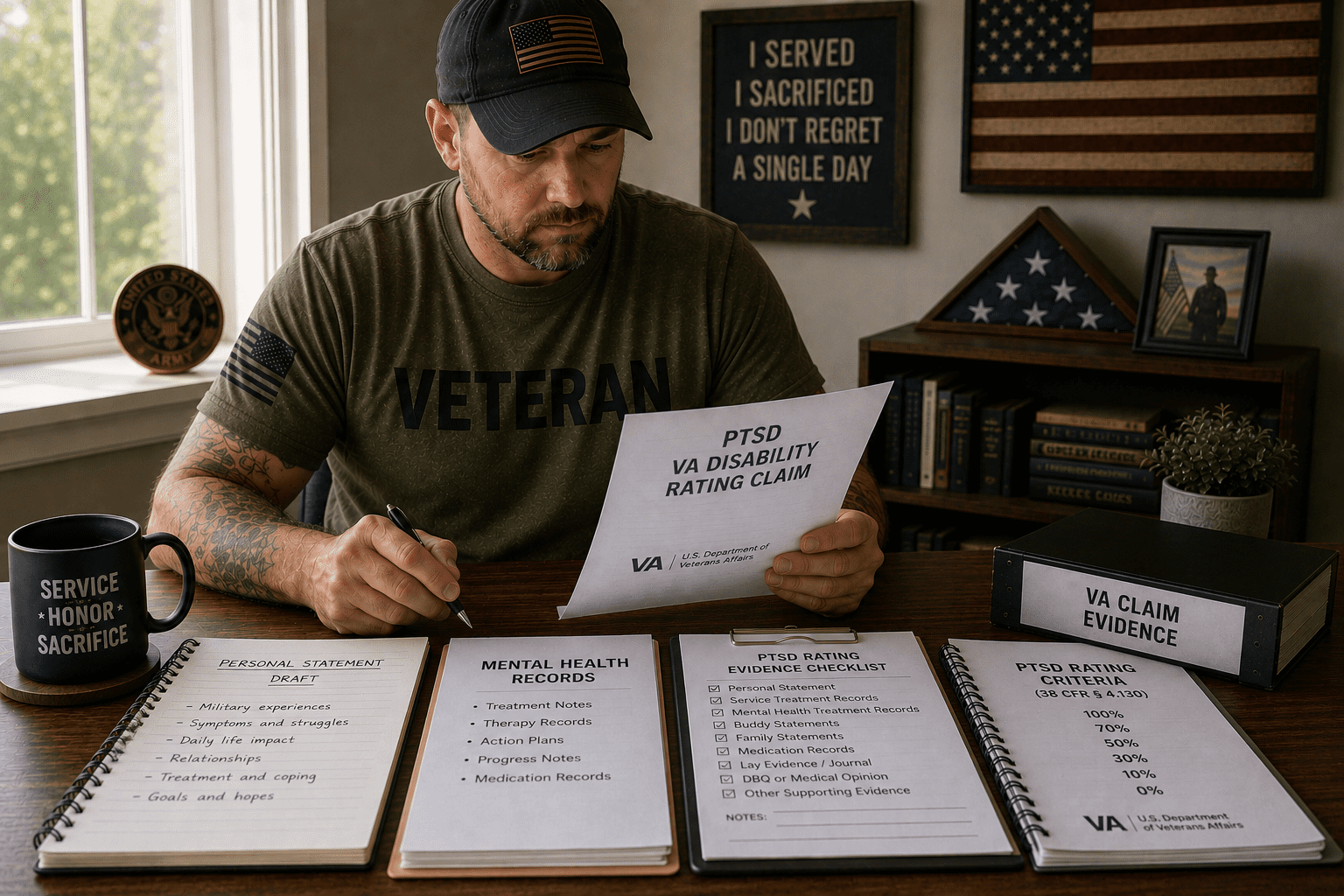
PTSD VA Rating Common Mistakes: What Veterans Should Avoid
PTSD VA rating common mistakes can lead to a lower rating, a delayed claim, or a denial even when a veteran is genuinely struggling. The VA does not rate PTSD only by diagnosis. Instead, it looks at how symptoms affect work, relationships, judgment, mood, thinking, safety, and daily function.
What Are the Most Common PTSD VA Rating Mistakes?
Why PTSD Ratings Are Often Lower Than Veterans Expect
PTSD ratings are often lower than veterans expect because many veterans understate their symptoms. Some say they are “fine” out of habit. Others avoid discussing anger, panic, isolation, suicidal thoughts, memory problems, or relationship damage because those details feel private or uncomfortable.
However, the VA rating decision depends heavily on what the record shows. If treatment notes and exam answers only mention occasional nightmares, the VA may not understand the full disability picture. Meanwhile, if the evidence shows panic attacks, impaired work performance, social withdrawal, depression, hypervigilance, and trouble adapting to stress, the rating picture may look different.
Warrior Allegiance’s PTSD resource explains that PTSD can affect sleep, mood, relationships, concentration, work, and daily life. Those functional details are exactly what veterans should document before filing or appealing.
PTSD overview →PTSD Rating Mistakes and Evidence Fixes
Use this table as a practical checklist. It does not replace a VA decision, but it helps veterans spot where PTSD rating evidence often falls short.
| Common mistake | Why it hurts | What VA may miss | Evidence fix | Watch out for |
|---|---|---|---|---|
| Minimizing symptoms | The file may look less severe than real life | Panic, anger, isolation, sleep disruption, depression | Symptom diary, honest exam answers, treatment notes | Saying “I’m okay” when you are not |
| Focusing only on diagnosis | Diagnosis alone does not set the rating | Occupational and social impairment | Work records, relationship statements, provider notes | Assuming PTSD automatically means a high rating |
| Vague C&P exam answers | Examiner may not capture frequency or severity | How often symptoms occur and how long they last | Prepare examples before the exam | Giving one-word answers |
| Leaving out work impact | Ratings depend partly on occupational impairment | Missed work, conflicts, reduced performance, job changes | Supervisor notes, HR records, lay statements | Only discussing symptoms at home |
| Leaving out social impairment | VA may underestimate relationship damage | Isolation, divorce, family conflict, distrust, avoidance | Spouse, family, or friend statements | Hiding symptoms out of embarrassment |
Mistake 1: Minimizing PTSD Symptoms
One of the biggest PTSD VA rating common mistakes is minimizing symptoms. Many veterans have spent years pushing through fear, anger, sleep loss, and stress. So, when asked how they are doing, they answer automatically: “I’m fine.”
That response can hurt a claim if it does not match reality. The VA needs to understand what happens on bad days, not just how the veteran presents in a short appointment. For example, a veteran may appear calm during an exam but still have nightmares, panic attacks, hypervigilance, irritability, isolation, or trouble adapting to stressful situations.
Therefore, veterans should be honest and specific. Describe the symptoms, how often they happen, what triggers them, how long they last, and what they prevent you from doing. Do not exaggerate, but do not downplay either.
Mistake 2: Treating Diagnosis as the Whole Claim
A PTSD diagnosis is important, but it is not the whole claim. The VA rating is based on severity and impairment. Two veterans can both have PTSD and receive different ratings because their symptoms affect work and relationships differently.
For instance, one veteran may have occasional symptoms controlled with treatment. Another may have frequent panic, serious sleep disruption, impaired judgment, anger outbursts, social withdrawal, and difficulty maintaining employment. The diagnosis may be similar, but the rating evidence is not.
A strong PTSD claim should show diagnosis, stressor evidence, nexus evidence, and current impairment. Warrior Allegiance’s PTSD proof guide explains that veterans often need a current diagnosis, in-service stressor support, and a connection between PTSD and service.
PTSD proof guide →Mistake 3: Not Explaining Occupational and Social Impairment
PTSD VA ratings depend heavily on occupational and social impairment. That means the VA wants to know how PTSD affects work, school, family, friendships, communication, judgment, mood, and ability to handle stress.
Occupational impairment may include missed work, conflicts with coworkers, difficulty concentrating, reduced productivity, trouble following instructions, panic in public settings, or changing jobs because of symptoms. Social impairment may include isolation, divorce, family conflict, emotional numbness, avoidance, anger, or inability to trust others.
Additionally, veterans should describe changes over time. Did symptoms worsen after service? Did relationships break down? Did work become harder? Did treatment increase? Those details help connect symptoms to the rating formula.
Mistake 4: Underpreparing for the C&P Exam
The C&P exam is not the time to memorize a script, but it is also not something to walk into unprepared. Veterans should know what symptoms they experience and be ready to explain them clearly.
A common mistake is giving short answers that do not show frequency, duration, or impact. For example, saying “I have sleep problems” is less useful than explaining that nightmares wake you three times per week, you sleep four hours most nights, and fatigue affects concentration at work.
Before the exam, veterans can write down examples of panic attacks, anger episodes, avoidance, memory issues, intrusive thoughts, depression, suicidal ideation, relationship problems, or job trouble. This helps them answer accurately when stress or anxiety makes it hard to think.
Mistake 5: Leaving Out Lay Statements
Lay statements can help show what PTSD looks like outside the clinic. A spouse, family member, friend, coworker, or fellow service member may notice symptoms the veteran has learned to hide.
A strong lay statement can describe sleep disruption, mood changes, isolation, anger, panic, avoidance, memory problems, missed events, or work problems. It should avoid medical conclusions and focus on observed behavior.
For example, a spouse might explain that the veteran sleeps separately because of nightmares, avoids crowds, checks doors repeatedly, or becomes irritable after reminders of service. These details can support the larger disability picture.
What Evidence Helps Avoid PTSD VA Rating Common Mistakes?
PTSD VA rating common mistakes are easier to avoid when the evidence is organized around symptoms, frequency, severity, duration, and functional impact. Veterans should gather records that show what PTSD does in real life.
- Mental health treatment records. Therapy notes, psychiatric visits, medication changes, crisis care, or group counseling can show severity over time.
- C&P exam details. The exam should reflect frequency, triggers, symptoms, and occupational and social impairment.
- Personal statement. A veteran statement can explain symptoms, stressors, work problems, relationships, and daily limitations.
- Lay statements. Spouse, family, coworker, or friend statements can describe observable PTSD effects.
- Work records. Missed days, job changes, disciplinary actions, accommodations, or performance problems may support occupational impairment.
- Safety evidence. Suicidal ideation, panic, impaired impulse control, or dangerous episodes should be documented carefully and honestly.
- Medication history. Prescriptions and dosage changes can show treatment intensity and ongoing symptoms.
Additionally, veterans should keep the evidence consistent. If the personal statement says symptoms are severe but treatment notes say “doing well” without context, the VA may not understand the full picture. Explain good days, bad days, and why symptoms may appear different in appointments.
How to Build a Stronger PTSD Rating File
Start by reviewing the current rating decision or denial letter. Look for the reason the VA gave the rating. Did it say symptoms fit a lower level? Did it miss work impact? Did the examiner fail to capture social impairment? Did the file lack stressor or nexus evidence?
Next, compare the decision to your actual symptoms. Focus on frequency, severity, duration, and impairment. Then gather evidence that fills the gaps. For example, if the VA overlooked work problems, gather work records and lay statements. If the exam missed panic attacks, prepare a symptom log and treatment notes.
Finally, be direct in your personal statement. Explain how PTSD affects sleep, mood, judgment, memory, concentration, relationships, work, stress tolerance, and safety. The strongest statements are honest, specific, and tied to real examples.
PTSD ratings guide →Frequently Asked Questions
Q1 What are PTSD VA rating common mistakes veterans should avoid? +
Q2 Can minimizing symptoms lower a PTSD VA rating? +
Q3 What should veterans say at a PTSD C&P exam? +
Q4 Why does work and social impairment matter for PTSD ratings? +
Q5 Do lay statements help PTSD claims? +
Get Help Avoiding PTSD Rating Mistakes
PTSD VA rating common mistakes can happen when veterans understate symptoms, leave out work or relationship impact, or assume diagnosis alone controls the rating. The strongest PTSD claims show the full disability picture through honest, specific, well-organized evidence.