

Clear, local guidance for veterans filing, appealing, or increasing VA disability claims in El Paso and after service at Fort Bliss.
This page is your starting point for understanding VA disability claims, appeals, ratings, evidence, and local resources in El Paso. Use the sections below to find the right next step whether you are filing your first claim, responding to a denial, or trying to increase an existing rating.
Choose Your Next Step
Jump to the right section based on where you are in the process.
Start Here
New to the VA claims process or not sure what comes next? Read these first.
How Long Does a VA Disability Claim Take in 2026?
A realistic month-by-month look at how VA claims move in 2026 — intake, evidence gathering, C&P exam, rating decision, and what usually slows each step down.
Read the guide →
VA Claim Denied — What to Do Next Before Your Deadline Passes
The three appeal paths after a denial, how long you have to act, and which path fits which situation. Read this before anything else if you just got a decision letter you do not agree with.
Read the guide →
How to Increase VA Disability Rating: 7 Proven Ways
Seven specific routes to a higher rating — new evidence, worsening claims, secondary conditions, TDIU, and more — with guidance on which route fits which case.
Read the guide →

Intent to File a VA Disability Claim
How filing an Intent to File locks in your effective date, how long it protects you, and why this is usually the first action a prepared veteran takes.
Read the guide →

Local Help for Fort Bliss and El Paso Veterans
Veterans in El Paso and Fort Bliss often need more than general VA information. They need local filing context, transition timing guidance, and a clear picture of where exams, records, and claim-support steps actually happen. The guides below are written specifically for this region.
VA Regional Office El Paso: The Complete Guide
How the El Paso Regional Office fits into your claim, what it handles, what it does not, and how to reach the right people without getting stuck in the general queue.
Read the guide →
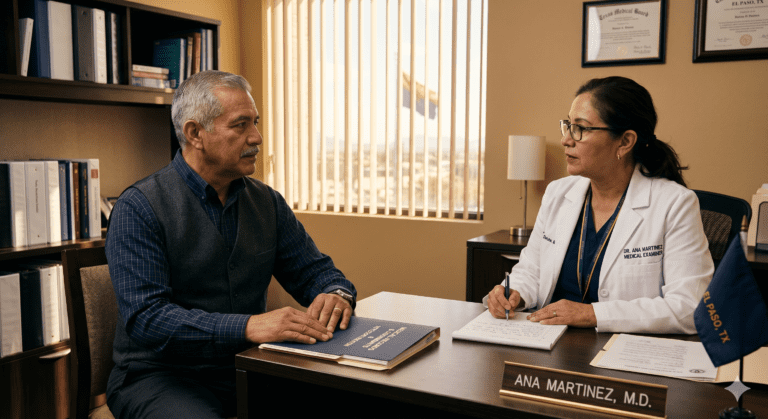
Where Is Your VA C&P Exam in El Paso? QTC, VES, and What Comes Next
C&P exams in El Paso are usually handled by QTC or VES. Here is what each one looks like, how to prepare, and what to do if the exam notes do not match what you said.
Read the guide →
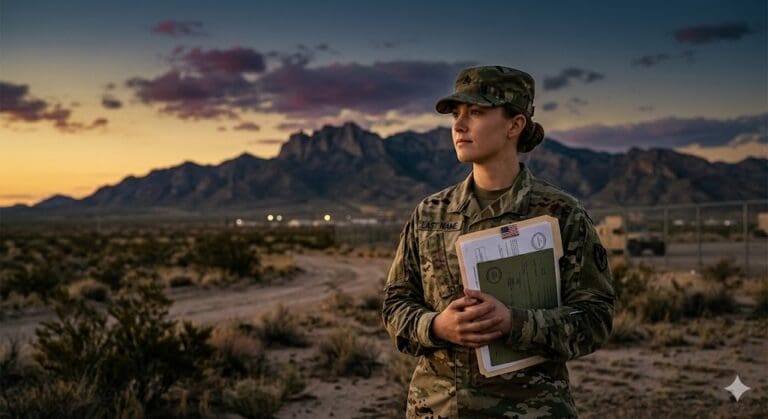
Transitioning Out of Fort Bliss: The VA Claim Walkthrough
What the Fort Bliss TAP class does not cover about timing, records, BDD claims, and filing before vs. after separation.
Read the guide →

Where to File a VA Claim in El Paso
Your filing options in El Paso at a glance — self-file, VSO, accredited agent, attorney — and how to pick the right one for your situation.
Read the guide →Evidence, Forms, and What Strengthens a Claim

If your claim is weak on paper, this is usually where the problem starts.
What Is a Nexus Letter in a VA Claim?
What a nexus letter actually is, when it helps, when it is not needed, and what the VA looks for in one that carries weight.
Read the guide →
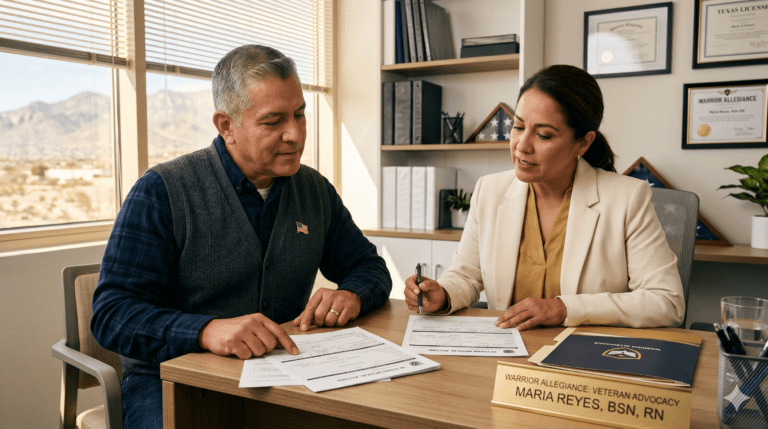
What Is a DBQ Form in a VA Claim?
A plain-English guide to Disability Benefits Questionnaires — what they do, who fills them out, and how they interact with your C&P exam.
Read the guide →

How to Write a Statement in Support That the VA Will Read
The common mistakes that get personal statements ignored, and a structure that keeps the adjudicator reading to the last line.
Read the guide →
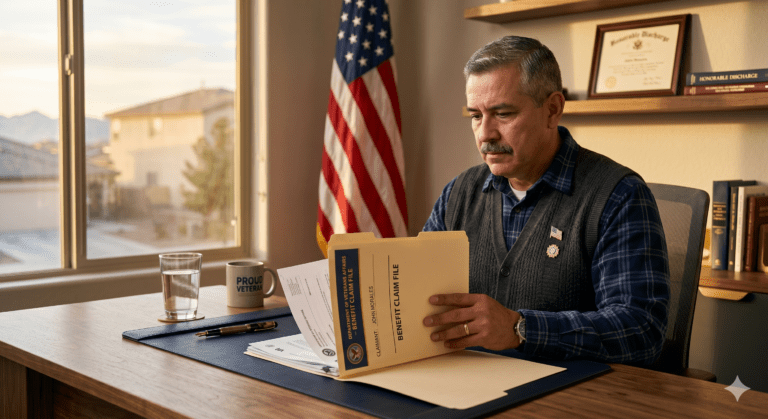
What Is a Fully Developed Claim VA?
When a Fully Developed Claim makes sense, what you have to include, and what it can cost you if you use it wrong.
Read the guide →Denied Claims, Appeals, and Rating Increases
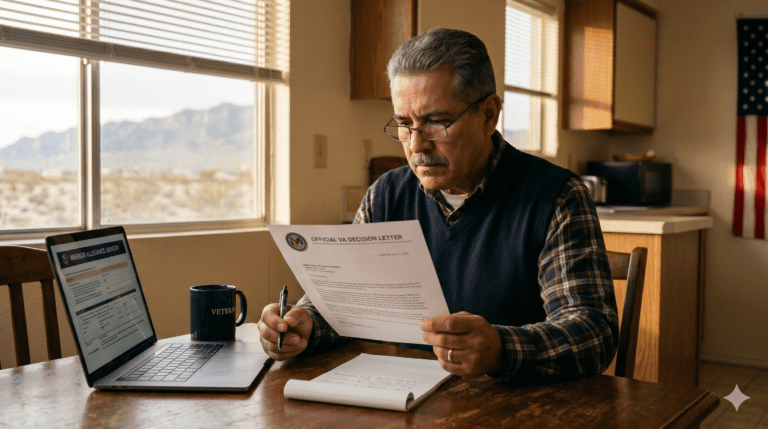
Most veterans do not need more motivation. They need the right path and the right evidence. Whether you were denied, want a higher rating, or need to close the gap to 100%, start here.
The VA Appeal Process in 2026 Is Not One Road — It's Three
Supplemental Claim, Higher-Level Review, and Board Appeal — what each one is for, what it costs you in time, and how to choose the right lane.
Read the guide →
VA Claim Denied — What to Do Next Before Your Deadline Passes
Your 1-year window, the first three things to check on the decision letter, and how to avoid the mistake that quietly resets the clock.
Read the guide →
How to Increase VA Disability Rating: 7 Proven Ways
Secondary claims, worsening claims, TDIU, new evidence, and four more routes — with a clear sense of which fits which case.
Read the guide →

The Gap Between 90% and 100% VA Disability: How to Cross It
Why combined ratings stall at 90%, how TDIU changes the math, and which conditions are most likely to push a claim into the 100% range.
Read the guide →Common VA Disability Topics
Pick the cluster that matches your situation.
PTSD
Proving PTSD is less about your story and more about the evidence that supports it.

Sleep Apnea
Sleep apnea ratings and requirements changed. Know what the current rules actually say.

Tinnitus + Secondary
Tinnitus caps at 10%, but it often opens the door to related secondary claims that add up.

Tinnitus: The Key That Unlocks Thousands More
Why 10% is the max for tinnitus alone, and how it opens the door to migraines, anxiety, and hearing-related secondary claims worth more than the original rating.
Read the guide →

What Counts as a Secondary Condition
Real examples of secondary conditions the VA accepts, what evidence they require, and the common claims that get denied for lack of causal connection.
Read the guide →

GERD Secondary to VA Disability
How stress, PTSD medications, and chronic pain meds open the door to a secondary GERD claim — and why this is one of the most commonly missed benefits.
Read the guide →TBI + Pain
The VA does not rate your injury. It rates what the injury leaves you unable to do.

Frequently Asked Questions
Quick answers for the questions El Paso and Fort Bliss veterans ask most.
How do I start a VA disability claim after Fort Bliss?
The fastest first step is filing an Intent to File. It locks in your effective date and gives you up to a year to submit the full claim with supporting evidence. From there, you gather service treatment records, identify each condition you want to claim, collect medical documentation, and file the formal claim either through VA.gov, an accredited VSO, or an accredited representative. If you are still on active duty at Fort Bliss, look into the Benefits Delivery at Discharge program so your claim can be worked before you separate.
Where do veterans in El Paso go for VA claim help?
El Paso veterans typically have four options: file on their own through VA.gov, work with a VSO, work with an accredited claims agent, or work with a VA-accredited attorney. The right choice depends on the complexity of your case, whether you have been denied before, and how much time you can put into it. Our team is based around the Fort Bliss and El Paso community and focuses specifically on claim strategy and evidence development.
What happens after a VA claim denial?
You have one year from the date of the decision letter to take action. You have three options: a Supplemental Claim (file new and relevant evidence), a Higher-Level Review (ask a senior reviewer to re-decide the case with no new evidence), or a Board Appeal (send the case to the Board of Veterans’ Appeals). Each path has different timelines and strategic trade-offs. Missing the deadline usually resets your effective date, which can cost you months or years of back pay.
What evidence usually makes the biggest difference?
Three things tend to move claims more than anything else: a clear in-service event or exposure in your records, current medical evidence of the condition, and a credible nexus tying the two together. A well-built personal statement (VA Form 21-4138), a supportive DBQ, and a detailed nexus letter from a qualified provider are the most common tools used to build that chain. Missing any one of those three links is the most common reason a claim gets denied.
What is a nexus letter and when do I need one?
A nexus letter is a medical opinion from a qualified provider stating that your current condition is "at least as likely as not" caused or aggravated by your military service. You usually need one when the connection between service and the condition is not obvious from the records alone — for example, secondary conditions, delayed-onset conditions, or claims where your service treatment records are thin. You do not always need one if the condition is clearly documented in service and the VA recognizes the link.
Where are VA C&P exams done in El Paso?
Most C&P exams for El Paso-area veterans are contracted out to QTC or VES rather than performed at a VA facility. Appointments are generally scheduled at a local clinic or medical office. Prepare by reviewing your claimed conditions, bringing any recent medical records you want the examiner to see, and being specific about how each condition affects your daily life and work.
Can secondary conditions raise my total rating?
Yes. Secondary conditions are conditions caused or aggravated by a service-connected condition. Common examples include GERD secondary to PTSD medications, sleep apnea secondary to a service-connected respiratory condition, or depression secondary to chronic pain. Because VA math is not simple addition, adding even a single secondary condition at the right rating can move your combined rating into a higher bracket and increase your monthly compensation.
How do I go from 90% to 100% VA disability?
There are two main routes. The first is scheduler 100% — raising a single rating or stacking new and worsened conditions high enough that the combined rating rounds to 100%. The second is Total Disability based on Individual Unemployability (TDIU), which pays at the 100% rate when service-connected conditions prevent you from maintaining substantially gainful employment, even if your scheduler rating is lower. Most veterans who cross this gap do so with a combination of secondary claims, worsening claims, and documented evidence of work impact.
Need Help Building a Stronger VA Claim?
Whether you are filing for the first time, responding to a denial, or trying to increase your rating, the right claim strategy depends on evidence, timing, and the path you choose next. Our team helps veterans in El Paso and beyond understand what to file, what to avoid, and how to build a more complete claim.
Veterans Trust Warrior Allegiance
Real Veterans. Real Results
EXCELLENT Based on 454 reviews Posted on Google Felica MurchisonTrustindex verifies that the original source of the review is Google. The staff was very professional as they guided me through the process. They were very helpful and friendly. Their efforts and guidance have led to an increase to my ratings. Thank you for your help and dedication to help veterans as myself.Posted on Google Richard BarnesTrustindex verifies that the original source of the review is Google. Excellent Organization! I recommend them to any Veteran seeking assistance. Charles R. BarnesPosted on Google Matthew EverettTrustindex verifies that the original source of the review is Google. Amazing experience could not recommend this company more! Professional and courteous!Posted on Google Arturo JimenezTrustindex verifies that the original source of the review is Google. Warrior allegiance took me from 10 percent to 80 percent. It just took patiencePosted on Google Peter MarquezTrustindex verifies that the original source of the review is Google. You guys are the best.Posted on Google Julian RobertsTrustindex verifies that the original source of the review is Google. Melanie was very friendly and super helpful when reviewing my claim and the W.A. Team was very helpful and informative when answering questions about the process along the way. The claims took some time but I received backpay ultimately they helped increase my rating!Posted on Google Gerardo MonroyTrustindex verifies that the original source of the review is Google. Excellent, professional expert service!!