
Free Veteran Resources 2026: What You Qualify For — and What Most Veterans Are Still Missing
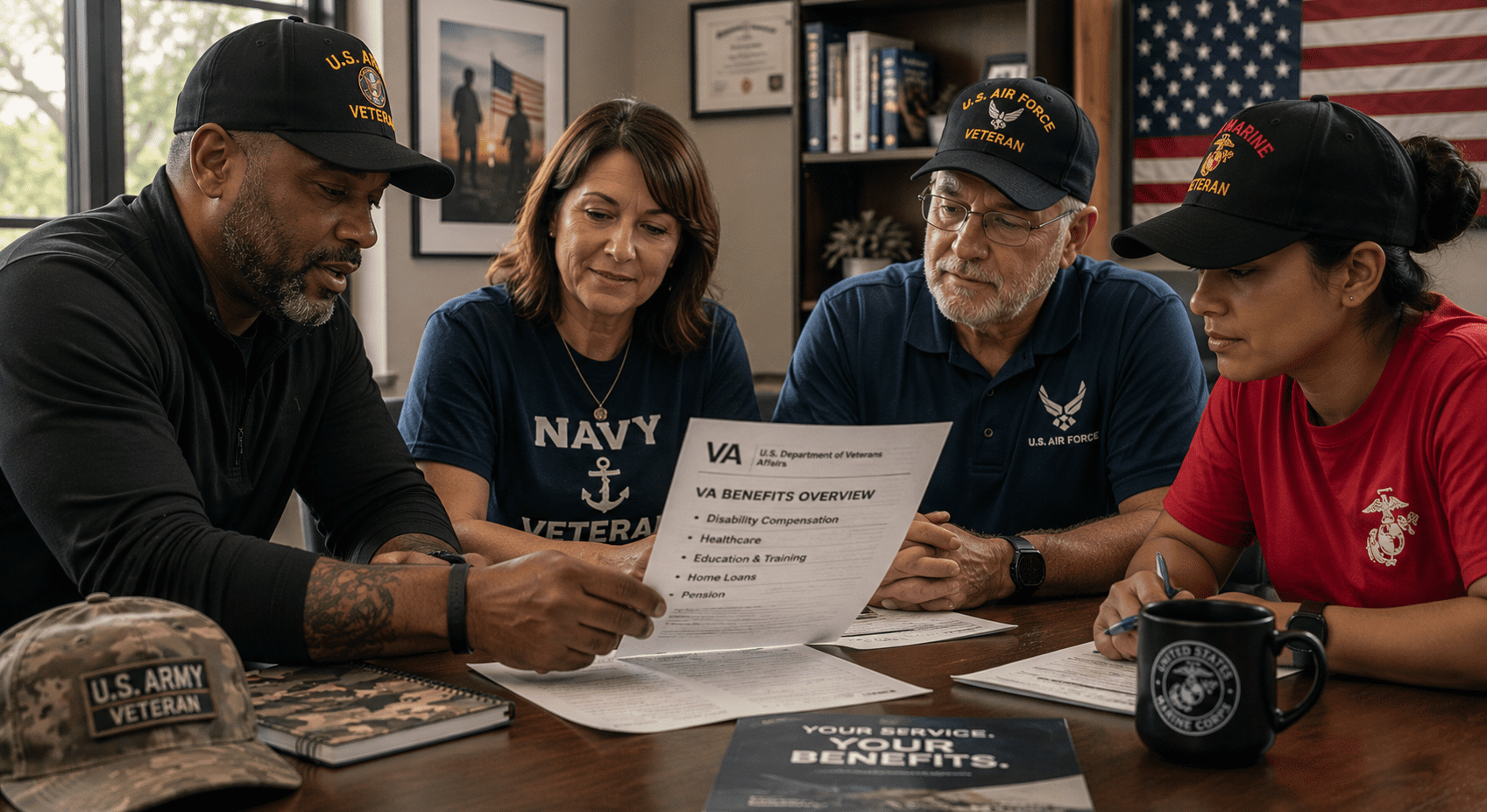
Free veteran resources 2026 cover financial compensation, healthcare, housing, education, employment, and family benefits — and most veterans use only one or two of them. However, the federal and state programs available to veterans in 2026 represent the most comprehensive benefit system in the nation's history. Furthermore, the 2026 COLA increase raised VA disability compensation rates at every tier. The PACT Act expanded toxic exposure eligibility. Consequently, veterans who have not reviewed their benefit picture recently may qualify for programs they were denied in earlier years — or programs they never knew existed. This guide covers every major category of free veteran resources 2026 and where most veterans leave money and access unclaimed.
What Free Veteran Resources 2026 Are Available?
Free Veteran Resources 2026 — Every Major Category at a Glance
The table below shows every major category of free veteran resources 2026, specific programs within each category, and the eligibility trigger that unlocks each one. For official program details, see the VA's full benefits page. For the complete breakdown of every federal program and its 2026 rate, the federal veterans benefits guide for 2026 covers every program in full detail.
| Category | Key Programs | What You Receive | Primary Eligibility Trigger |
|---|---|---|---|
| Financial | VA Disability Compensation, VA Pension, DIC | Tax-free monthly payments — up to $3,737.85/month | Service-connected condition, wartime service, or survivor status |
| Healthcare | VA Healthcare, CHAMPVA, PCAFC | Free or low-cost medical, mental health, prescriptions | Qualifying service; 100% P&T for CHAMPVA |
| Housing | VA Home Loan, SAH/SHA Grants, HUD-VASH | No down payment loan; housing adaptation grants | Qualifying service; service-connected mobility disability for SAH |
| Education | Post-9/11 GI Bill, DEA, Fry Scholarship, VR&E | Tuition, housing stipend, books, vocational training | Service history; P&T or death for DEA/Fry |
| Employment | VR&E Chapter 31, HIRE Vets, TAP | Career counseling, job training, placement support | Service-connected disability affecting employment for VR&E |
| Family Benefits | CHAMPVA, DEA, Caregiver Stipend (PCAFC) | Healthcare, education, and monthly stipend for caregivers | 100% P&T for CHAMPVA/DEA; serious injury for PCAFC |
| State Benefits | Property tax exemptions, tuition waivers, fee waivers | Varies by state — often tied to rating level | Varies — many require 100% or P&T designation |
Free Veteran Resources 2026 — Financial Assistance Programs
Financial benefits are the highest-value free veteran resources 2026 for most veterans. VA disability compensation provides monthly tax-free payments for every service-connected condition. The 2026 COLA adjustment raised rates at every rating tier. A veteran at 70% now receives $1,716.28 per month. A veteran at 100% receives $3,737.85 per month. Furthermore, these payments are entirely tax-free — veterans do not report them as income on federal returns, and most states exempt them from state income tax as well.
VA Disability Compensation — The Highest-Value Financial Resource
VA disability compensation applies to any condition that began during or was aggravated by military service. Specifically, it covers physical conditions, mental health conditions, and secondary conditions caused by already service-connected disabilities. Additionally, the 2026 PACT Act expansion added new presumptive conditions for toxic exposure — including burn pits, Agent Orange, and radiation — making previously denied veterans newly eligible. Furthermore, veterans who have never filed, who filed and were denied before 2023, or who hold ratings below what their conditions support all represent unclaimed monthly income within this program. Understanding how the combined rating formula calculates multiple conditions is the strategic foundation of maximizing this benefit. The VA math formula guide explains the calculation in full detail.
VA Pension and Emergency Financial Assistance
VA pension provides monthly tax-free payments to low-income wartime veterans who do not have service-connected disabilities. Moreover, the Aid and Attendance enhancement adds a significant monthly amount for veterans who need daily personal care assistance. Additionally, nonprofit organizations — including the American Legion, VFW, and DAV — provide emergency financial assistance for veterans facing unexpected hardship. Consequently, veterans who do not qualify for disability compensation may still access monthly financial support through the pension program or emergency aid channels.
Free Veteran Resources 2026 — Healthcare Programs
VA healthcare is one of the most consistently underutilized free veteran resources 2026. Many veterans assume they do not qualify because they have private insurance, did not serve long enough, or separated too long ago. However, most veterans with qualifying service — typically 24 continuous months of active duty — are eligible for VA healthcare enrollment. For official eligibility details, see the VA's healthcare eligibility page. Furthermore, priority group assignment determines copay levels — veterans with higher disability ratings receive Priority Group 1 status with no copays for VA medical services.
CHAMPVA — Free Healthcare for Eligible Dependents
CHAMPVA provides comprehensive healthcare coverage for eligible spouses and dependent children of veterans rated 100% P&T or TDIU. It covers medical, mental health, prescriptions, and preventive care with no monthly premium. Additionally, CHAMPVA continues for eligible surviving spouses after a veteran's death from a service-connected cause. Consequently, reaching 100% P&T status transforms healthcare access for the entire family — not just the veteran. For the complete CHAMPVA and dependent benefits picture, the military spouse VA benefits guide for 2026 covers every qualifying program.
VA Caregiver Support — Monthly Stipend for Family Caregivers
The Program of Comprehensive Assistance for Family Caregivers (PCAFC) pays a monthly stipend to family members who provide primary care for veterans with serious service-connected injuries. The MISSION Act expanded PCAFC to cover veterans of all eras — not just post-9/11 veterans. Furthermore, stipend amounts range from approximately $800 to $2,500 per month depending on geographic area and care tier. Notably, most eligible caregiving family members have never applied because they do not know the program exists. Therefore, any veteran whose family member provides daily personal care should review PCAFC eligibility immediately.
Most Overlooked Free Veteran Resources 2026 — Where the Biggest Gaps Are
Many free veteran resources 2026 go unclaimed not because veterans are ineligible — but because no one tells them the programs exist. These are the five categories veterans most consistently miss.
Secondary VA Disability Conditions
The VA allows secondary service connection for any condition caused or aggravated by an already service-connected disability. Sleep apnea secondary to PTSD, hip pain secondary to knee injury, anxiety secondary to tinnitus — each qualifies for an independent rating. Furthermore, each additional rating adds to the combined total under the VA's whole person formula. Specifically, a veteran at 70% who adds a 30% secondary condition reaches 79% raw — rounding to 80% and gaining $278.73 more per month. Most veterans with primary service-connected conditions have unfiled secondary conditions. Those conditions represent the most commonly missed free veteran resources 2026 financial opportunity.
State-Level Benefits Layered on Federal Programs
Federal VA benefits are the floor. Most states layer additional programs on top — and most veterans never investigate the state level. Specifically, the majority of states offer full or substantial property tax exemptions for veterans rated 100% or P&T. Additionally, many states provide tuition waivers at state universities for veterans and their dependents, vehicle registration fee waivers, free hunting and fishing licenses, and state park fee waivers. Moreover, surviving spouses of fallen or service-connected veterans qualify for many of these state programs independently. Consequently, a veteran who knows their federal eligibility but has never reviewed their state's benefit matrix almost certainly qualifies for programs they are not currently receiving.
Family Benefits — Education and Healthcare for Dependents
Dependent benefits are among the most under-claimed free veteran resources 2026. DEA (Chapter 35) provides up to 45 months of education and training benefits for spouses and dependent children of P&T veterans. The Fry Scholarship provides equivalent Post-9/11 GI Bill benefits to surviving spouses and children of fallen service members. CHAMPVA provides healthcare. Each of these programs requires a separate application — none activate automatically alongside the veteran's rating. Furthermore, each eligible family member holds an independent entitlement, so a family with a spouse and two children may hold three separate DEA entitlements in addition to any GI Bill benefits the veteran transferred before separation.
Start a Free Benefits Review — Find What You're Missing →How to Access Free Veteran Resources 2026 — A Practical Framework
Identifying the free veteran resources 2026 a veteran qualifies for is the first step. Accessing them requires a clear sequence. The following framework applies to veterans filing for the first time, veterans reviewing an existing rating, and veterans seeking dependent benefits for their families.
Step 1 — Pull Your Current VA Rating Decision Letter
The rating decision letter lists every rated condition, every assigned percentage, and the VA's stated reasoning. It is the baseline for identifying every gap in the current benefit picture. Specifically, any condition affecting daily life that does not appear in the decision letter is either unrated or unconnected — and both are correctable. Veterans without a current rating should request their service treatment records through the National Archives before their first filing. Additionally, veterans who have never filed should file an Intent to File today to lock in the earliest possible effective date for any future approved claim.
Step 2 — Identify Every Qualifying Program
Compare the current rating against the eligibility thresholds for every program in the free veteran resources 2026 framework. Specifically: does the veteran qualify for VA healthcare enrollment? Does the combined rating support a rating increase that would unlock Priority Group 1? Does the veteran's PTSD produce secondary conditions not yet rated? Does a spouse or dependent qualify for CHAMPVA or DEA? Furthermore, check state-level eligibility — most state programs publish eligibility tables online by disability rating tier. Identifying every qualifying program before filing any individual claim produces the most complete and strategic approach.
Step 3 — File Strategically and Get Professional Support
Filing without a strategy produces incomplete claims — and incomplete claims produce incomplete ratings. Consequently, a free consultation before any filing identifies which conditions to claim, which secondary connections to establish, and which dependent benefits to apply for simultaneously. Warrior Allegiance provides this consultation at no cost with no upfront commitment. Furthermore, the team reviews the veteran's complete service history to identify every compensable condition before anything goes to the VA. Overall, the veterans who claim every free veteran resource 2026 they qualify for are the ones who approached the process as a complete strategy — not a series of individual applications.
Frequently Asked Questions — Free Veteran Resources 2026
Q1 What free resources are available for veterans in 2026? +
Q2 How do I find out which free veteran resources I qualify for? +
Q3 Are there free programs for veterans with no current VA rating? +
Q4 What free veteran resources are most commonly missed in 2026? +
Q5 How do veterans access free programs without getting overwhelmed? +
Most Veterans Qualify for More Than They Claim — Find Out Where the Gaps Are
Free veteran resources 2026 exist across financial, healthcare, housing, education, employment, and family categories. Most veterans use one or two. The rest go unclaimed — not because veterans are ineligible, but because the system does not tell them what they qualify for. Warrior Allegiance identifies every qualifying program for every veteran's specific service history and rating. No upfront fees. No risk. A 90%+ approval rate. Start your free consultation today and find out exactly which free veteran resources 2026 your service has already earned.