
How to Help Spouse With VA Claim: A Practical Guide
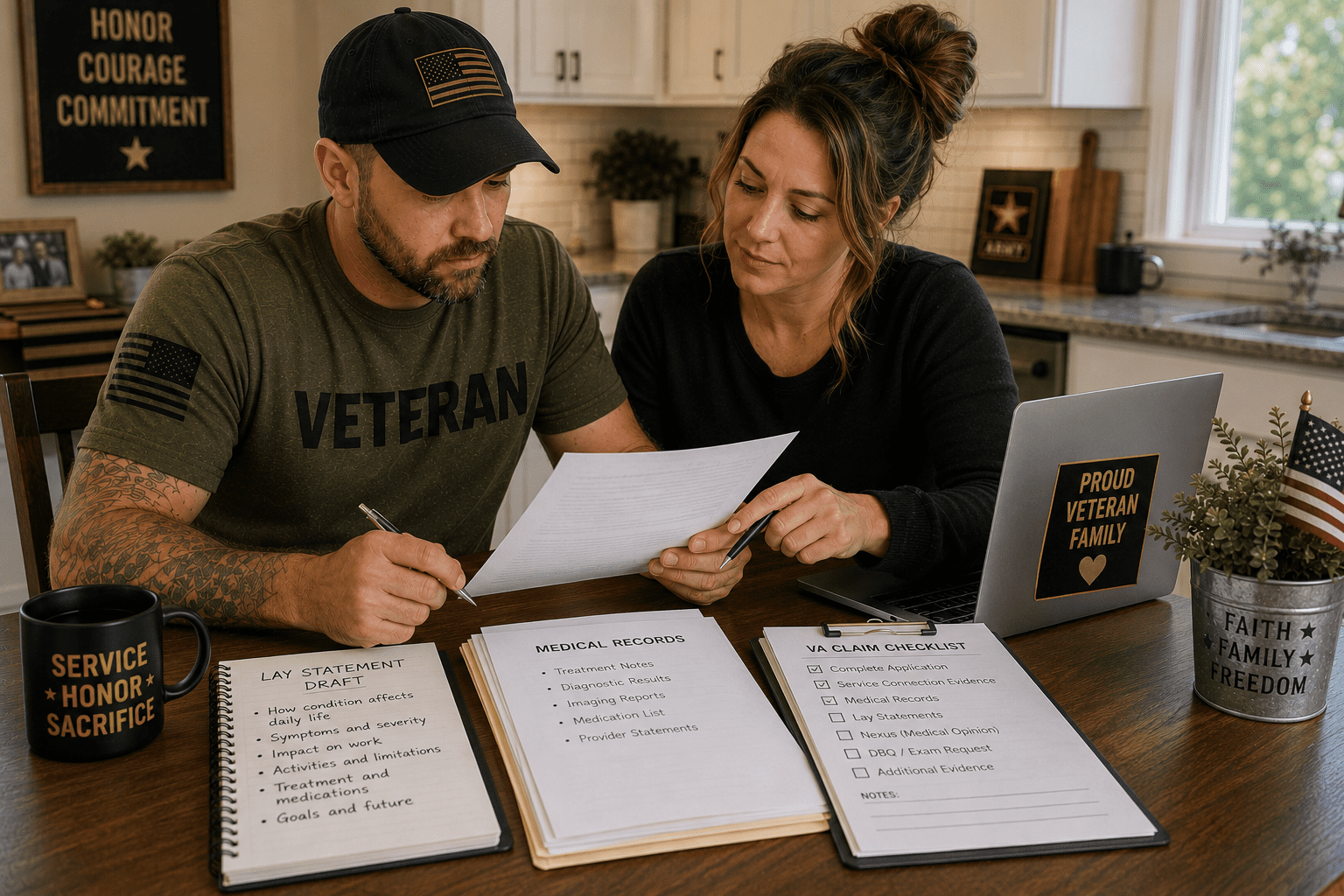
How to help spouse with VA claim is a question many husbands, wives, and partners ask when they see a veteran struggling but do not know what the VA needs. Your support can matter. However, the strongest help usually comes from observed facts, organized records, honest examples, and calm preparation.
How Can I Help My Spouse With a VA Claim?
Why Spouse Support Matters in a VA Claim
Spouse support matters because many disabilities are not fully visible in medical records. A doctor may record a diagnosis, medication, or treatment plan. However, a spouse often sees what happens after the appointment: sleepless nights, pain flares, panic attacks, mobility problems, memory lapses, irritability, missed activities, and exhaustion.
Additionally, veterans may minimize symptoms. Some say they are fine because they are used to pushing through. Others feel embarrassed discussing mental health, pain, digestive symptoms, migraines, or relationship strain. As a result, the claim file may look less severe than daily life really is.
Warrior Allegiance’s guide to spouse and dependent benefits explains that family members are often directly affected by a veteran’s benefits and disability picture. That is why spouse observations can be valuable when they are specific and credible.
Spouse Support Actions and Claim Value
Use this table as a practical checklist. It does not replace VA rules, but it can help spouses understand which support actions may strengthen the claim.
| Spouse action | Evidence value | What to include | Mistake to avoid | Best use |
|---|---|---|---|---|
| Write a lay statement | Shows daily-life impact | Observed symptoms, frequency, examples, limits | Diagnosing the condition | Initial claim, increase, appeal |
| Track symptoms | Shows pattern over time | Dates, triggers, duration, severity, missed activities | Only writing “bad day” | Migraines, PTSD, pain, flare-ups |
| Organize records | Helps claim clarity | Treatment notes, medications, decision letters, DD214 | Sending random piles of paper | Any claim stage |
| Prepare for C&P exam | Helps accurate answers | Examples of bad days, work impact, relationship impact | Coaching or scripting answers | Exams and reexams |
| Document work/family impact | Shows impairment | Missed events, job issues, caregiving needs | Overstating or guessing | Rating increases and appeals |
How to Write a Spouse Lay Statement
A spouse lay statement is one of the most useful ways to help. It should explain what you personally observe, how often it happens, how long it lasts, and how it affects daily life. It should not try to diagnose the veteran or argue the law.
Start with who you are and how long you have known the veteran. Then describe the condition or symptoms you observe. For example, you might explain that your spouse wakes from nightmares several times per week, avoids crowds, forgets appointments, cannot stand longer than 15 minutes, or misses family events because of migraines.
Next, use specific examples. “He has back pain” is weaker than “After standing at the grocery store for 20 minutes, he has to sit in the car while I finish shopping.” Specific details help the VA understand functional impact.
What Spouses Should Track Over Time
Symptom tracking helps because VA claims often depend on frequency, severity, duration, and functional loss. A spouse can help keep a simple log when the veteran is too tired, overwhelmed, or in pain to write everything down.
Useful details include date, symptom, trigger, medication, duration, missed work, missed family activity, sleep disruption, mood change, flare-up length, and recovery time. For mental health claims, note observable behavior such as isolation, panic, anger, avoidance, memory problems, or trouble adapting to stress. For physical claims, note mobility limits, pain flares, falls, assistive devices, or help needed with daily tasks.
However, tracking should stay honest and practical. A simple weekly pattern can be more useful than a complicated notebook that no one can maintain.
Helping With Medical and Service Records
Another way to help spouse with VA claim preparation is organizing records. Veterans may have VA medical records, private treatment notes, physical therapy records, imaging, medication lists, service records, prior decision letters, buddy statements, and appointment summaries in different places.
A spouse can help create folders by claim issue. For example, one folder might hold PTSD treatment records, another might hold back-condition imaging, and another might hold migraine logs. Also, keep copies of rating decisions and denial letters because they explain what the VA accepted, denied, or rated too low.
Warrior Allegiance’s VA disability claims support resource can help veterans understand why organized evidence matters before filing, increasing, or appealing a claim.
VA disability claims support →What Not to Say or Do When Helping
Good intentions can still hurt a claim if the evidence becomes exaggerated, vague, or inconsistent. Therefore, spouses should focus on what they have personally seen.
Avoid saying things like “I know this is 100% disabling” unless you are simply describing your opinion as a spouse. The VA needs facts, not rating guesses. Also avoid diagnosing conditions, copying language from the rating schedule without real examples, or making every symptom sound constant if it comes and goes.
Additionally, do not coach the veteran to say something untrue at a C&P exam. Help them remember real examples, but do not script answers. Credibility matters, and consistent honest evidence is stronger than dramatic language.
How to Help With C&P Exam Preparation
A C&P exam can feel stressful. A spouse can help by reviewing symptoms and examples before the appointment, especially if the veteran gets anxious or forgets details under pressure.
Start by making a short list of real examples. Include bad days, flare-ups, work problems, relationship strain, sleep issues, panic attacks, pain limits, medication side effects, or safety concerns. Then encourage the veteran to answer honestly and completely. “Fine” may be a habit, but it does not explain functional loss.
If the spouse attends the appointment, follow the examiner’s rules. Some examiners may allow spouse input, while others may not. Either way, the spouse’s written statement can still be submitted as evidence.
VA claim assistance guide →How to Build a Claim Support Checklist
Start with the claim issue. Is the veteran filing for PTSD, migraines, chronic pain, GERD, hearing loss, sleep apnea, or another condition? Once the issue is clear, list what evidence already exists and what is missing.
Next, help gather proof for the three core areas: current diagnosis, service connection, and current severity. The spouse can usually help most with the third area because they observe daily-life impact. However, they may also help locate service records, deployment records, prescriptions, or old treatment notes.
Finally, create a simple deadline calendar. Track C&P exams, evidence submission dates, appeal deadlines, medical appointments, and follow-up tasks. VA claims can feel overwhelming, but a shared checklist can reduce missed steps.
Common Mistakes Spouses Should Avoid
Spouses can be a powerful support system, but a few mistakes can weaken credibility or create confusion.
- Writing only emotions. It is okay to describe concern, but facts and examples matter more.
- Trying to diagnose. Describe symptoms you see instead of naming medical conclusions.
- Using vague phrases. “Always in pain” is less useful than specific limits and examples.
- Overcoaching for exams. Help your spouse remember facts, but do not script answers.
- Ignoring bad-day evidence. VA needs to understand flare-ups, not only average days.
- Missing deadlines. Track forms, exams, appeals, and requests for evidence.
As a result, the best spouse support is honest, organized, specific, and calm.
Frequently Asked Questions
Q1 How to help spouse with VA claim without hurting the case? +
Q2 Can a spouse write a VA lay statement? +
Q3 What should a spouse include in a VA buddy statement? +
Q4 Can a spouse help at a C&P exam? +
Q5 What is the biggest mistake spouses make with VA claims? +
Get Help Supporting a VA Claim
How to help spouse with VA claim success comes down to honest details, organized evidence, and steady support. You do not need to know every VA rule to help. You just need to document what you see clearly and help your spouse avoid missed records, missed deadlines, and vague statements.